An industry-standard death file that keeps the dead alive in your data. Ironic?
There’s a quiet irony at the center of how most organizations identify deceased individuals in their data.
The tool they rely on—the government’s primary mortality data source—was built specifically to find the dead. And yet, 8 out of 10 deaths never make it onto the file. They’re staying alive. In your data. In your systems. In your payments, your records, your compliance posture, and your bottom line.
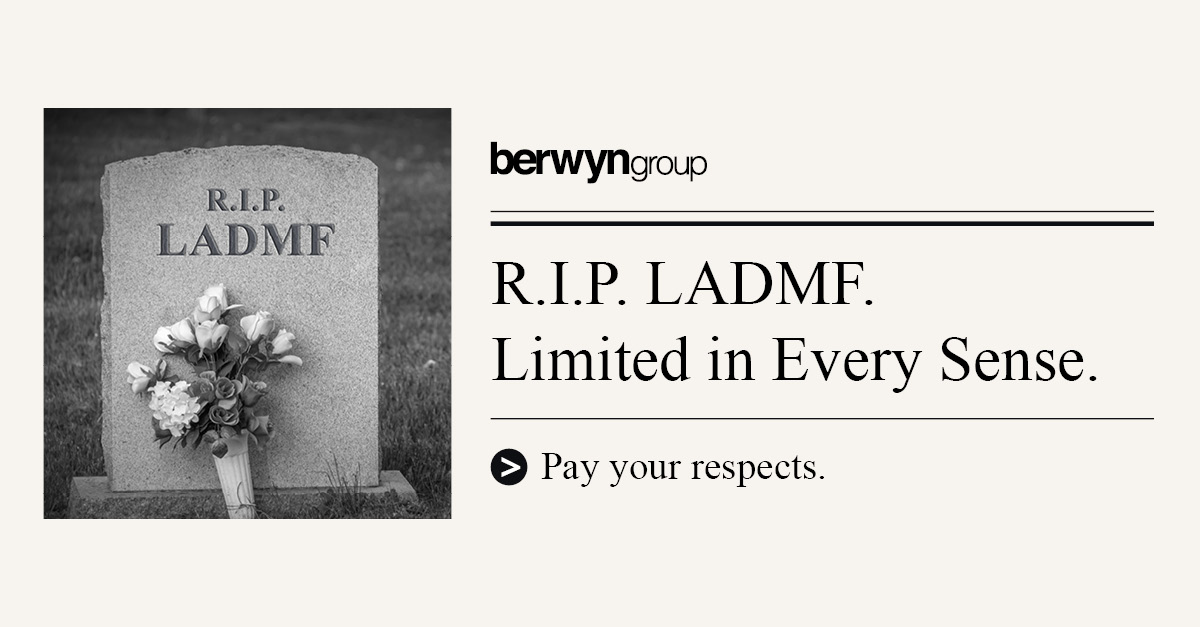
The Master File. Translates to master of none.
What the File Was Built to Do
The Limited Access Death Master File—the LADMF—was created with genuinely good intentions. Following the Section 203 reforms of the Bipartisan Budget Act of 2013, the Social Security Administration restricted access to its death records for two legitimate reasons: to protect the living from identity theft and to address growing privacy concerns around public death data.
The logic was sound. The result was a file that protected privacy at the expense of utility and the consequences are significant.
Restricted reporting, limited source diversity, and an increasingly narrow data pipeline left the file covering a steadily shrinking fraction of actual U.S. deaths. The NAIC said it plainly: the SSA Death Master File has degraded materially over time and is no longer an effective or appropriate mechanism for establishing statutory “knowledge of death.”
That’s not a fringe opinion. That’s a regulatory body telling the industry the file it relies on isn’t working.
What It Actually Does
Today, the LADMF identifies approximately 2 out of every 10 deaths. The other 8 never make it onto the file.
For insurance carriers, that gap means delayed claims, unreleased reserves, and beneficiaries waiting for benefits that should have been triggered. Every unidentified death is a promise unkept—to a policyholder, a beneficiary, a family.
For healthcare organizations, the consequences are equally real—deceased members in active eligibility systems, claims processing against people who are no longer alive, quality reporting denominators that include the deceased, and in the worst cases, deceased identities becoming vectors for fraud, waste, and abuse.
While the consequences manifest differently across industries—from pension overpayments and financial services compliance to government program integrity—the root cause is the same. A file missing 8 out of 10 deaths creates exposure wherever deceased individuals interact with active systems.
Mortality identification hasn’t always been top of mind for every organization. Some rely on the LADMF. Others use a commercial vendor. Still others have built something in-house. And there are those who may not have a formal process in place at all. Regardless of where your organization falls, the gap likely exists—and most organizations are working with an incomplete picture of mortality across their populations.
The Zombie Problem
At Berwyn, we affectionately refer to it as zombie data—dead people walking through active systems as if nothing happened.
Deceased members with active accounts. Policyholders who passed away months ago still showing up in records. Provider identities unvalidated against mortality data. Claims processing against people who are no longer alive.
The dead don’t disappear from your data just because they’ve passed. They stay—quietly compounding exposure across payment integrity, eligibility, compliance, and audit readiness—until someone looks closer.
The LADMF was supposed to be that someone. It isn’t anymore—and hasn’t been for quite some time.
We See Dead People.
So We Built Something Better
BerwynDMF was built because this problem needed a real solution—for every type of organization, regardless of what they’re currently using.
Drawing on 40,000+ independent data sources—including obituary records, state vital statistics, and funeral home notices—BerwynDMF identifies 7 out of every 10 deaths across any population.
If you’re currently using the LADMF:
Plug and play. BerwynDMF is delivered in a LADMF-compatible format. No IT project. No workflow disruption. No switching cost. It drops directly into your existing process and immediately delivers better results.
If you’re not currently using a formal mortality identification source:
BerwynDMF fits naturally into existing data workflows—flagging deceased records across member eligibility, provider data, and payment integrity systems without meaningful IT involvement. Most organizations are up and running quickly. The lift is minimal. The impact is immediate.
In both cases—one-way delivery, no PII required, and if we don’t provide additional deaths in your population in the first 30-days, you don’t pay. That’s our commitment to every engagement.
Q&A
Isn’t the LADMF a regulatory requirement for some organizations?
It’s referenced in various industry frameworks, which is part of why organizations continue to rely on it. But referencing the LADMF as a source and relying on it exclusively are very different things. BerwynDMF’s broader coverage supports rather than conflicts with existing compliance requirements—and gives your organization a stronger, more defensible mortality identification posture.
How is BerwynDMF different from other commercial mortality data vendors?
Most commercial vendors draw from a limited number of sources and deliver results that aren’t meaningfully better than the LADMF. BerwynDMF is built on 40,000+ independent sources, continuously cross-validated, and delivered in the same file format—making it easy to adopt regardless of what you’re currently using.
What does “same file format” actually mean?
Simply put—no integration required. BerwynDMF is delivered in a LADMF-compatible layout. If your systems already ingest the LADMF, they can ingest BerwynDMF without modification. No IT project. No workflow disruption. No switching cost. You’re up and running immediately.
We’re not currently using the LADMF—is BerwynDMF still relevant for us?
Absolutely. BerwynDMF gives you a straightforward, low-friction way to start identifying deceased members, providers, policyholders and records across your existing systems—without an IT project, without PII exposure, and without workflow disruption. Most organizations that implement BerwynDMF for the first time are surprised by what they find.
How do you guarantee results?
We provide additional deaths in your population within the first 30-days or you don’t pay. That’s our commitment to every engagement.
How long does deployment take?
Typically, minimal—for both LADMF users and organizations implementing mortality identification for the first time. We’ll walk you through the specifics during the proof-of-concept stage.
The Bottom Line
The file built to find the dead has been keeping them alive in your data. The gap is real, the exposure is quantifiable, and the solution exists.
8 out of 10 deaths never make it onto the file everyone relies on.
We built something superior.
Contact us to find out how many deaths are living in your data—and what it’s costing you.